Says The Talbot Board of Elections Has Not Followed State Law to Accommodate Observers
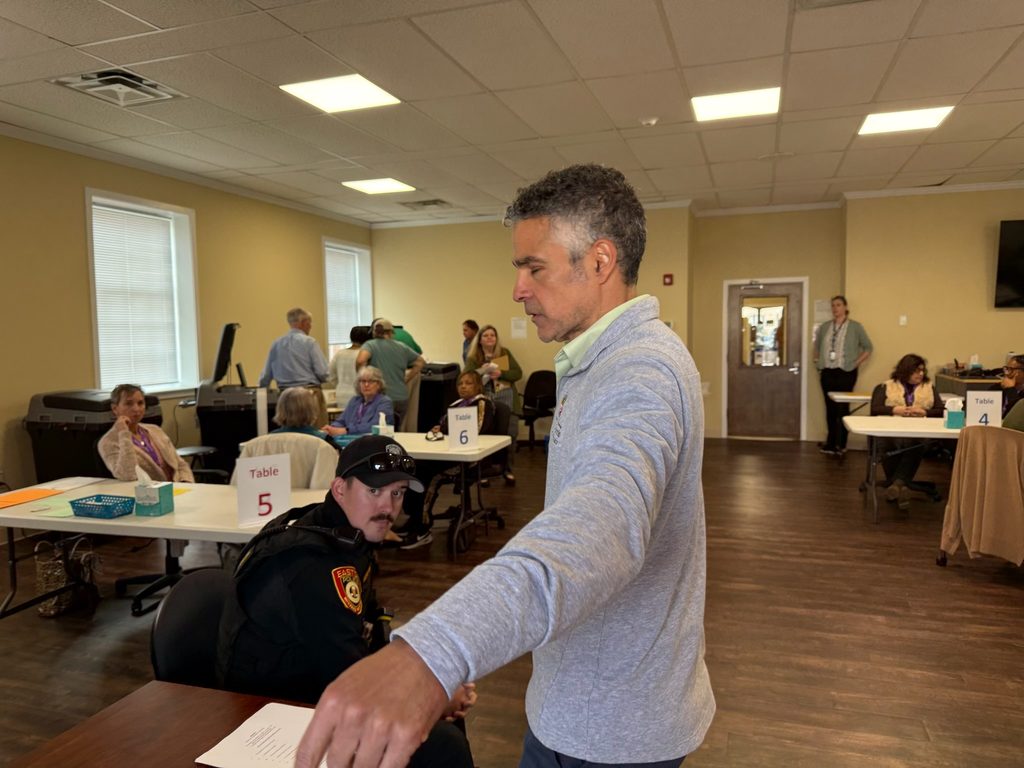
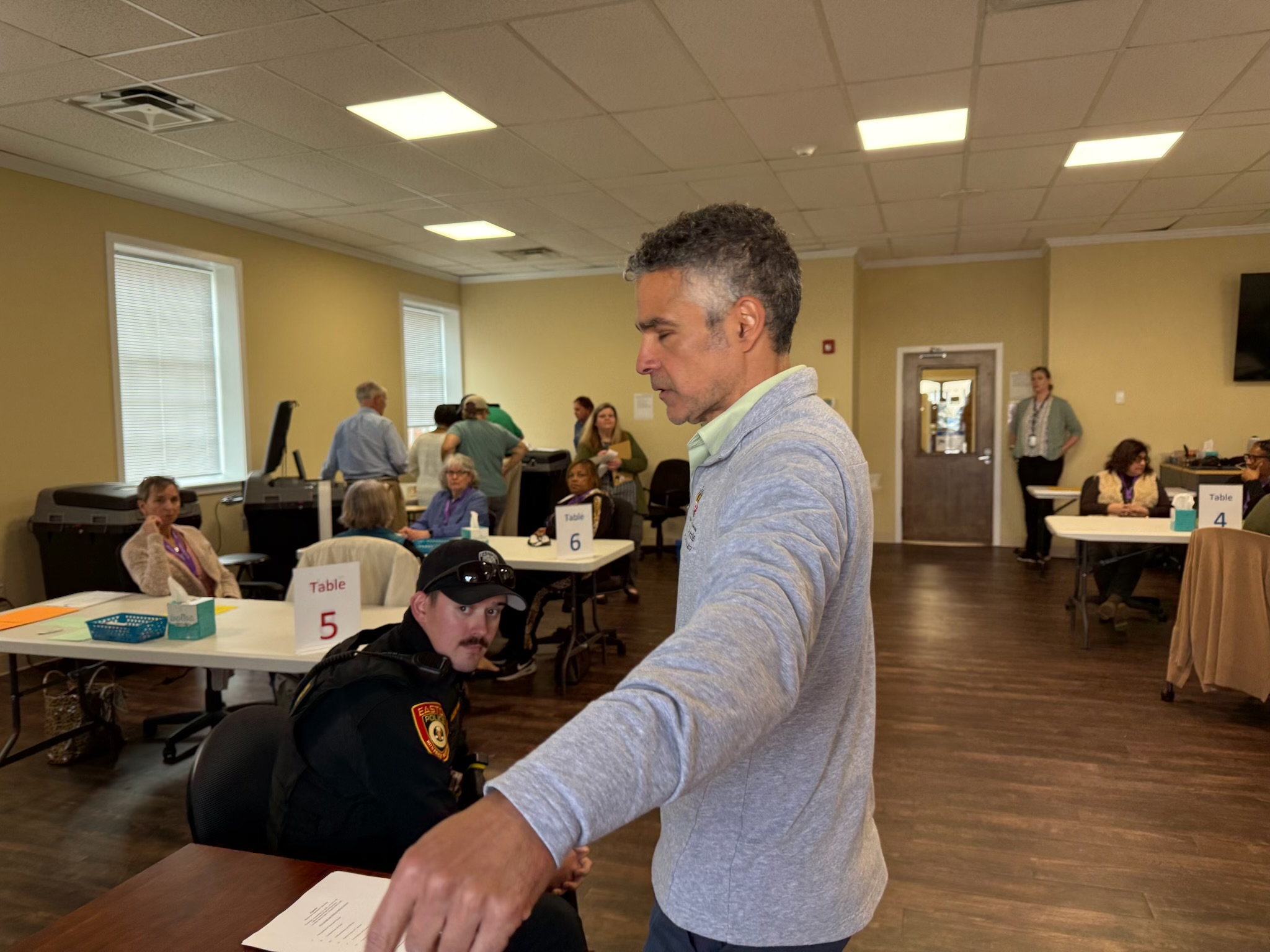
Jared DeMarinis Maryland’s State Administrator of Elections- visiting Talbot County Canvassing on November 12, 2026.
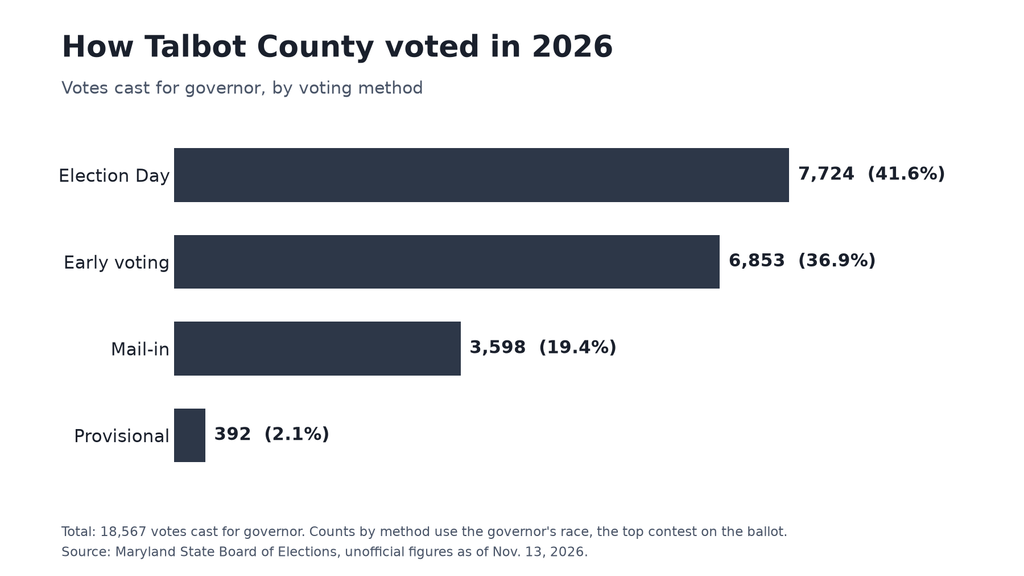
With 2026 early voting and same day voting completed on November 3, the Talbot County Board of Elections, along with others in Maryland, proceeded to conduct the count of mail in and provisional ballots on November 5, November 12 and November 13. The election results were certified November 16:
Republicans Retain County Council Majority In Talbot County - The Easton Gazette
It would be great if we didn't have to write an article about lack of transparency and possible inconsistencies in the election process here in Talbot County. While many of us trust the count here, the Talbot Republican Central Committee says there are problems in how the elections are being run by the Talbot County Board of Elections.
The Executive Director of the Talbot County Board of Elections is Tammy Stafford. Stafford got a $30k raise last year and won Maryland Election Director of the Year.
Please follow us on Truth Social, X, YouTube, Minds, Telegram, Rumble, GETTR, Gab, Instagram
The Talbot County Board of Elections, which had nine (9) infractions in 2024 allegedly struggles with complying with state law regarding the right of the public to attend and view the public canvassing of the Mail in Ballots as well as the Provisional Ballots. Here are some of those laws:
Canvass Open to Public (COMAR 33.08.01.07): “Throughout the canvass, all sessions, deliberations, and proceedings shall be open to the public and the media.”
3.Public Inspection of Ballots & Other Documents (COMAR 33.08.03.02): “Observers and challengers are allowed to visually inspect ballots, provisional ballot applications, and absentee ballot envelopes, and the like, at a reasonable distance, but may not touch them.”
4.This access should be recognized for the inspection and counting of absentee ballots (COMAR 33.11.04.01(A)(3)) and provisional ballots (COMAR 33.16.04.01(c)).
When members of the elected Talbot County Republican Central Committee and other members of the public showed up on November 12 and 13, the Board of Elections had set up the counting and viewing area so that observers were 12 to 15 feet away from the counting tables, not a "reasonable" distance for viewing the ballots and confirming whether ballots were sealed, had proper postmarks, or follow the batch identification as ballots moved through the process according to observers.
A reasonable distance is mandated to make sure that observers could confirm that mail in ballots could be validated and counted. The batch number is important so that members of the public can later locate and test the Board of Election's account of how a group of ballots was handled. The only stipulation is that members of the public may not touch the ballots.
According to the Republican Central Committee, the Board of Elections, led by President Susan MacKinnon and Executive Director Tammy Stafford "disregarded and disrespected Maryland election laws."
When the members of the Republican Central Committee asked the board to rearrange the room so that the public could adequately view the ballots, Executive Director Tammy Stafford vigorously pleaded with the Board to deny that request because it would take time away from canvassing to arrange the room properly according to the law. A problem which could have been solved prior to canvassing day with a correct arrangement took over an hour of calls to lawyers to get MacKinnon and Stafford to re-arrange the room and follow the law.
The Republicans reminded the board, that if they are not able to visually INSPECT the ballots for proper postmarks, etc., meaning if they cannot SEE them, that could subject every ballot to a challenge. As of today's publication date, no challenges have been filed.
The canvassing was conducted without further interruption.
On November 10, 2026 the Republican Central Committee sent a letter to the Talbot County Board of Elections in preparation for canvassing this week:
When they did not get an answer, the Central Committee contacted Board of Elections lawyer Lyndsey Ryan who responded by saying that she can only advise the Board of Elections, not tell them what to do.
Allegations of problems and inconsistencies are not new. In 2024, Talbot County Sheriff Joe Gamble wrote this letter to the Board of Elections regarding citizen complaints of voting irregularities:
In his letter:
- Sheriff Gamble stated that he had received more than 25 citizen complaints about the upcoming election and alleged that Republican election judges were not being equally represented.
- He referenced Maryland Election Law §§10‑201 and 10‑202 and asserted that the Board of Elections was not complying with those provisions.
- He wrote that his office would be conducting security checks and assisting with ballot transport and "strongly urge[d]" the Board to comply with Maryland law.
- He asked the Board to advise whether it intended to correct the election-judge representation issue and what the timeline would be.
Maryland State Elections Administrator Jared DeMarinis responded to the letter that Talbot County election officials were already in compliance with state election law. The state's position was that unaffiliated election judges could be used under Maryland law and that the county's staffing met statutory requirements.
Maryland's Previous ballot controversies
DeMarinis himself has been the subject of scrutiny regarding numerous election issues in Maryland. He was present at the Talbot County counting November 12.
The most significant recent state controversy involved Maryland's 2026 primary election, when a vendor coding error caused some voters to receive mail-in ballots associated with the wrong political party. State officials ultimately decided to send replacement ballots to more than 500,000 voters. Critics argued that the mistake damaged voter confidence and created potential confusion.
According to DeMarinis, the problem originated with a third-party vendor's coding error rather than intentional misconduct by election officials. He stated that safeguards were in place to ensure that only one valid ballot per voter would be counted. [wbal.com]
Following the ballot error, Republican members of the U.S. House Administration Committee requested explanations from DeMarinis regarding:
- How the error occurred,
- How many voters were affected,
- What corrective measures were implemented, and
- Whether similar problems could occur in future elections. [wbal.com], [wbal.com]
Some lawmakers characterized the situation as a major election-management failure, although reporting did not present evidence that the error was intentional. [wbal.com]
Certain election-integrity organizations questioned the state's response to the ballot problem. Critics argued that:
- Voters might remain confused about which ballot to use.
- Some voters might not receive or understand replacement-ballot instructions.
- The state could not guarantee that the administrative response would eliminate all risk of voter disenfranchisement. [foxbaltimore.com]
These organizations generally focused on administrative competence and voter confidence.
President Trump and allies publicly asserted that the ballot incident warranted federal investigation. Trump characterized the situation as involving hundreds of thousands of problematic mail ballots, while Maryland election officials rejected those claims and stated that no fraudulent ballots had been issued. [wbal.com], [dailyvoice.com]
In 2026, the U.S. Department of Justice sent DeMarinis a letter warning about potential criminal liability related to voter-roll maintenance and concerns involving noncitizen registration. DeMarinis described the letter as political intimidation and maintained that Maryland was complying with federal and state election laws. The DOJ's concerns centered on voter-roll administration, not allegations that DeMarinis personally engaged in fraud.
Local election board violations
Locally, there were officially confirmed violations involving the Talbot County Board of Elections and the Maryland Open Meetings Act violations, as found by the Maryland Open Meetings Compliance Board in multiple opinions issued in late 2025 and early 2026. [oag.maryland.gov], [oag.maryland.gov]
The more recent allegations concerning election-judge parity, ballot-drop-box procedures, voter rolls, and litigation appear to have been raised by members of the public, but as of the writing of this article, we could not verify that those allegations were formally sustained by a court or state election authority. [talbotcountymd.gov]
Talbot has other issues. They have 104.7% registered voters vs the census of legal voters in Talbot. There are allegations and some proof of deceased people being kept on county voter rolls. The son of one deceased person presented his mother’s death certificate to the election board and was assured she was taken off the rolls. As of November 12th, she was still listed as an active voter.
The Board's February 2026 minutes summarize that the Compliance Board cited violations involving:
- §3-305(d)(2)
- §3-301
- §3-305(b)(7) [talbotcountymd.gov], [oag.maryland.gov]
According to the Board's own February 2026 meeting minutes, the Compliance Board cited:
- §3-305(d)(2)
- §3-104
- §3-306(c)(2)
- §3-306(e)(1)
- §3-305(b)(1)
- §3-301 [talbotcountymd.gov], [oag.maryland.gov]
These provisions address notice requirements, closed-session procedures, records retention, minute requirements, personnel exceptions, and open-meeting requirements.
All of these problems shake public confidence in local election results which are often decided by less than 100 votes.
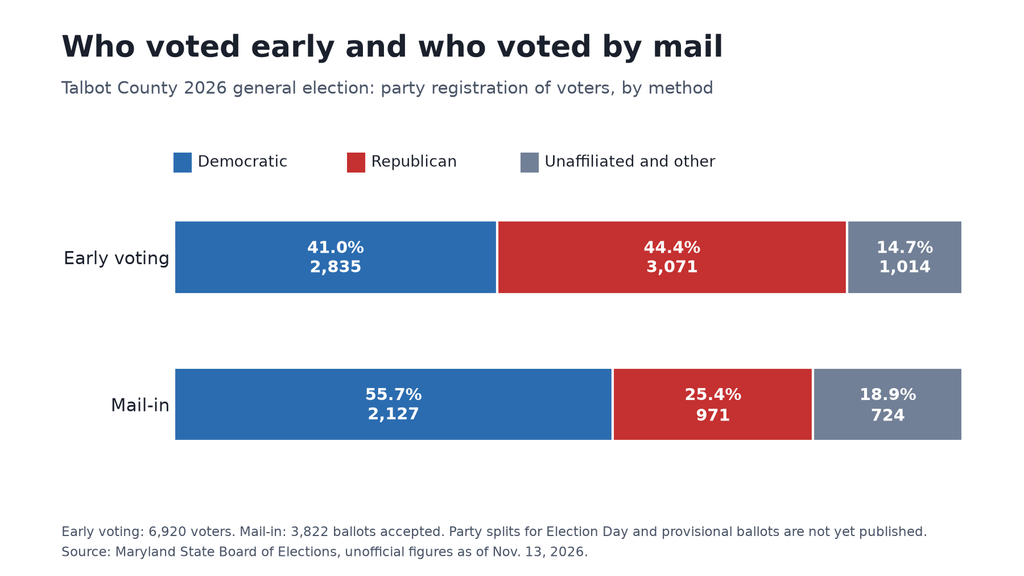
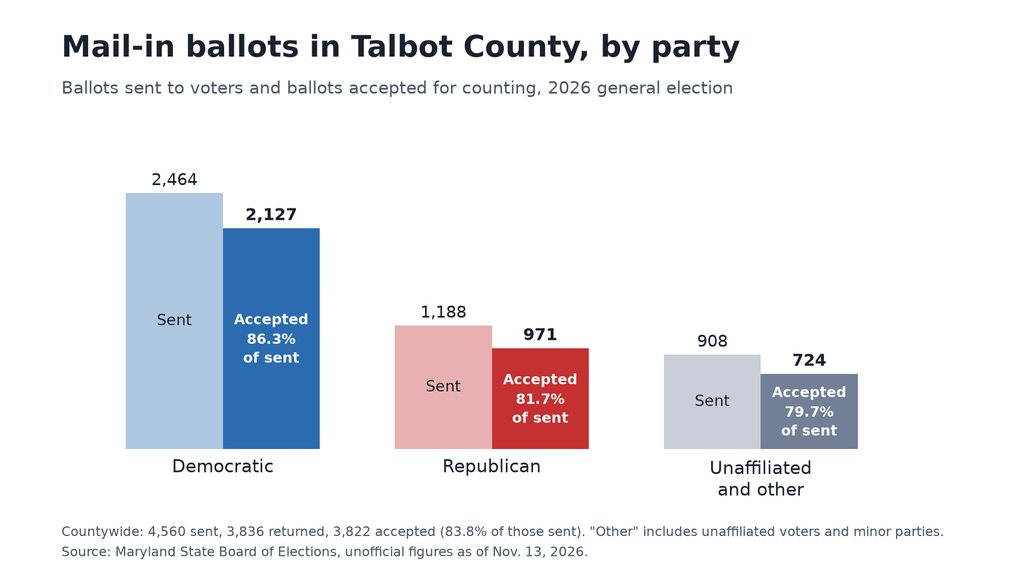
The following chart show the breakdown of type of ballots cast versus party.
Information on state random audit scheduled for November 23, 2026
Maryland is planning a random statewide audit on November 23, 2026. The process is open to public viewing. Here is the link:
Voting System - Ballot Audit Plan
Voting System - Ballot Audit Plan
Maryland’s risk-limiting audit is meant to verify the count, not automatically change results. If it finds an inaccurate outcome, state law requires election officials to investigate and correct the result if needed. The statewide certification of the November 3 general-election results is scheduled for December 3. The risk-limiting audit is due to be completed by December 2, before that statewide certification. elections.maryland.gov
Opinion and Contributor Content Disclaimer
From time to time, this publication publishes opinion pieces, statements, guest columns, letters, and articles submitted by individuals and organizations outside of our editorial staff. The views, opinions, and assertions expressed in such contributions are solely those of the authors and do not necessarily reflect the views, policies, positions, or opinions of this publication, its editors, owners, staff, or affiliates.
Publication of outside submissions does not constitute endorsement of any statements, claims, conclusions, products, services, or organizations referenced therein. Responsibility for the accuracy of facts, opinions, and representations contained in contributed content rests entirely with the author(s).