



Please follow us on Gab, Minds, Telegram, Rumble, Truth Social, Gettr, Twitter, Youtube
WASHINGTON — The U.S. Supreme Court on May 15 rejected an emergency appeal by Virginia Democratic officials seeking to overturn the Virginia Supreme Court’s decision to block a congressional redistricting map approved by voters in April.
In an unsigned order in the case Scott v. McDougle, the justices provided no explanation for their decision and no justice noted a dissent. The ruling leaves in place the Virginia Supreme Court’s May 8 decision that invalidated the results of a Democratic-backed ballot measure.
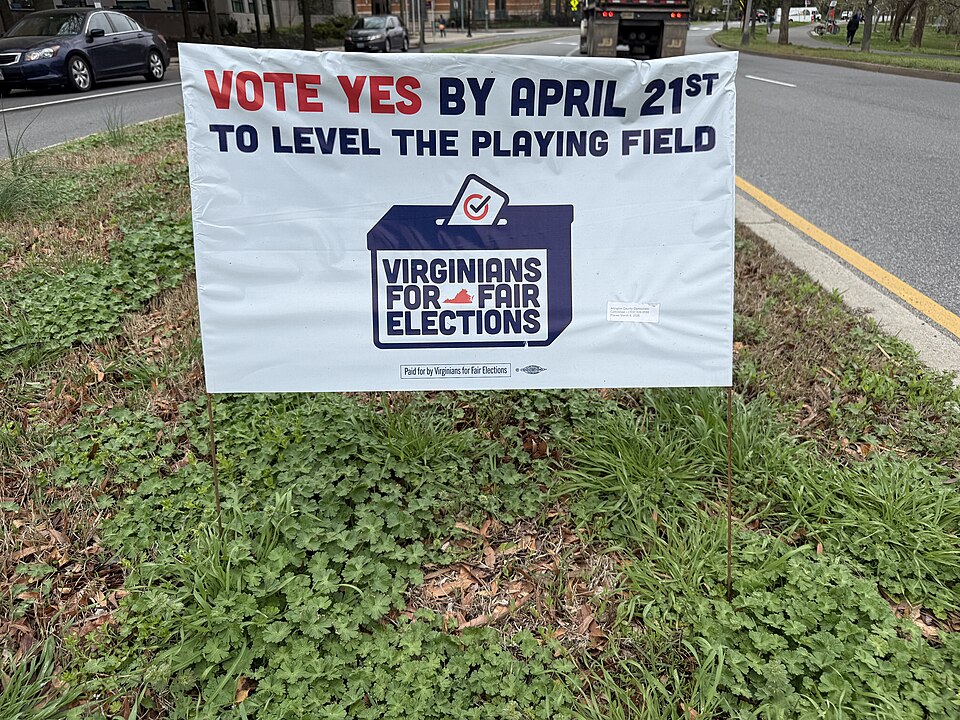
The referendum, which passed 52% to 48% on April 21, would have redrawn Virginia’s congressional districts to give Democrats a projected 10-1 advantage in the state’s U.S. House delegation. Virginia’s current delegation consists of six Democrats and five Republicans.
Virginia House Speaker Don Scott, a Democrat, had urged the U.S. Supreme Court to stay the state court ruling, arguing it was “deeply mistaken on two critical issues of federal law” with nationwide implications. Scott contended that the Virginia Supreme Court improperly interpreted the state constitution in light of federal election timing requirements.
“This decision violates federal law in two separate ways,” Scott wrote in his filing.
Republican state Sen. Ryan McDougle, the lead respondent and legislative commissioner for the Virginia Redistricting Commission, opposed the appeal. He called the application “extraordinary” for asking the nation’s highest court to intervene in a state constitutional matter so close to the 2026 election cycle.
McDougle noted that the filing omitted any specific deadline for relief and ignored a separate injunction that rendered the request largely moot. “You cannot violate the Constitution to change the Constitution,” McDougle wrote on X following the Supreme Court’s order.
The Virginia Supreme Court ruled 4-3 on May 8 that Democratic lawmakers had failed to follow proper legislative procedures when they fast-tracked the referendum last year to place it on the ballot ahead of the November 2026 elections. The map had been designed to flip four Republican-held congressional seats to Democrats.
The decision represents a significant setback for Democrats hoping to bolster their position in the closely divided U.S. House, where Republicans currently hold a narrow majority along with control of the Senate.
Virginia Gov. Abigail Spanberger, a Democrat, criticized the outcome, saying it effectively nullified the votes of more than three million Virginians.
“As Governor, I will make sure voters know when and how to cast their votes this year,” Spanberger wrote on X. “Because our votes are how we choose the representation we deserve.”
The case unfolded amid a broader wave of redistricting activity across the country following the decennial census. Efforts intensified after the U.S. Supreme Court’s April 29 ruling that race cannot be the predominant factor in drawing congressional district lines.
While state legislatures traditionally redraw maps every 10 years, several states—including Texas, Florida, California, and Virginia—have pursued mid-decade changes or voter-driven reforms. The Virginia dispute highlights ongoing tensions over the balance between voter initiatives, legislative authority, and constitutional procedures in electoral mapmaking.


